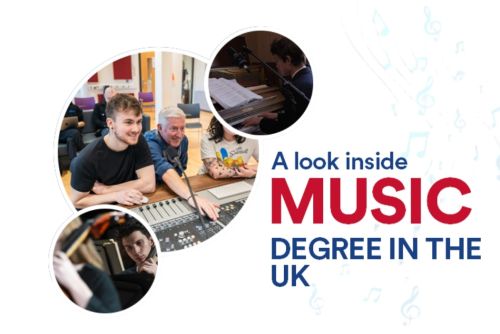
It takes more than just learning scales, enduring lengthy practices, or mastering that Bach fugue to get into a UK music program. It's a journey that combines academics and artists, history and harmony, solitude and symphony.
Let's draw back the velvet curtain and take a peek inside, whether you're a wide-eyed freshman who dreams of attending the Royal College of Music or you're simply interested in what actually happens behind the mahogany doors of Britain's universities and university music departments.
Study in UK
What does a Music Degree in UK covers?
A UK music degree is more complicated than an intricate jazz chord, while initially appearing to be a straightforward combination of theory and performance.
Most universities offer a Music Degreee in UK, with a blend of modules such as:
1. Music Theater
- Music for Stage- Composing or playing music for live theatrical plays
- Musical Theatre- Character development, staging, and vocal technique are all aspects of musical theater
- Opera Studies- Examine lyrics, staging styles, and vocal performance in both contemporary and historical opera.
Cooperation with drama departments is encouraged in many courses, and composers collaborate with actors, directors, and designers to stage original works, some of which are eventually presented in full-length public shows.
2. Music Production
- Studio Recording- Includes using live instruments, mixing consoles, and microphone positioning.
- Digital Audio Workstations (DAWs)- Logic Pro, Ableton Live, and Pro Tools become second nature.
- Sound Design- Produce everything from glitchy beat textures to dramatic soundscapes.
Prepare for practical experience in industry-standard studios and tasks that may include remixing an 80s pop song, producing for other students, or composing music for short films.
3. Music Technology
- Live electronics- Modification of live performances using tools like modular synths and Max/MSP.
- Sound engineering- Includes mastering tools, mixing methods, and the physics of acoustics.
- Interactive Media & Music- Music used in VR settings, interactive installations, and video games.
4. Music Business and Management
- Music Marketing and Branding- The goal is building an audience and getting your music recognized.
- Copyright and Music Law- Understand your royalties, your rights, and how to safeguard your creations.
- Entrepreneurship- Creating a freelance profession, raising money for projects, and making submissions to festivals, labels, and arts organizations
From practice rooms to pub gigs
Practice makes perfect or at least it makes lots of noise.
A typical music week mostly include:
- 1:1 instrumental lessons
- Practices for performances such as the jazz band, orchestra, chorus, or experimental
- Talks about Indian ragas or composers from the 20th century
- Film student's late-night jam sessions or short film scoring
- And let’s not forget pub gigs, open mics, or student-run music societies are a significant aspect of campus life. A string quartet performing Radiohead songs or a classical guitarist sharing a stage with a rapper are equally common.
Is it worth it?
A Music Degree in UK can change your life if you're driven, willing to put in the necessary effort, and curious about where the music may lead you. The notes on the page are not the only thing to consider. It has to do with community, identity and discipline. By learning how your voice, whether it be sung, strummed, or composed, contributes to the world's extensive and always changing soundtrack.
Therefore, keep in mind that pursuing a degree in music is more than just an education if you're considering doing so. It's a surround-sound way of living.
Reach out to our Counsellors